How Heavy Rainfall and Flash Flooding Affect Homes Near Boulder Creek
Heavy rain and flash flooding near Boulder Creek push water into basements, crawlspaces, and foundations. Here is how it happens and what to do next.
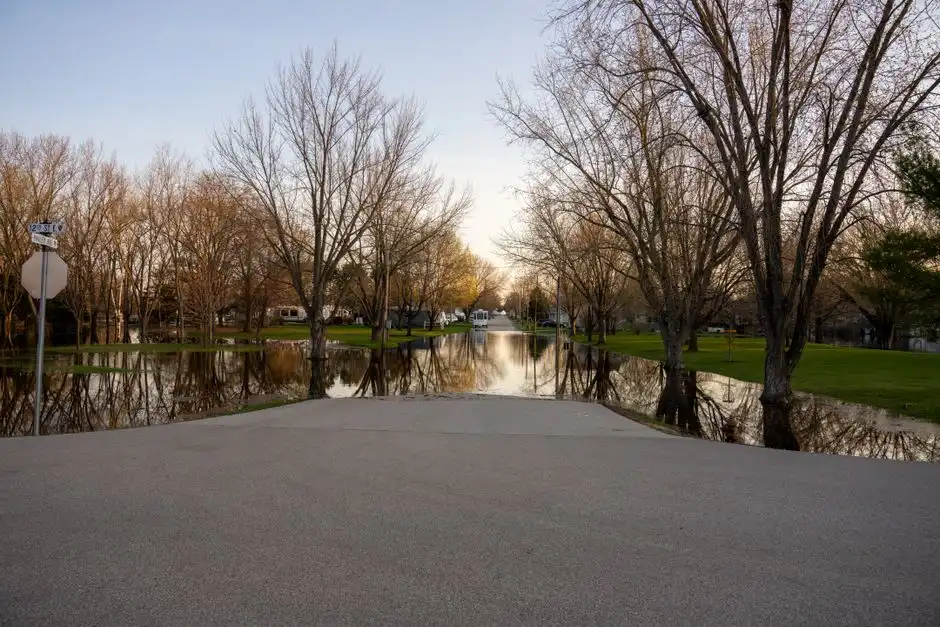
Heavy rainfall and flash flooding near Boulder Creek affect homes by pushing creek water, storm runoff, and groundwater into basements, crawlspaces, and foundation walls within minutes of a storm peak. Boulder Creek can rise several feet in under an hour when the foothills above town get 1.5 to 3 inches of rain, and the homes closest to the creek and its tributaries take on water first. This post covers why the creek floods so fast, how that water gets into your house, what to do in the first 24 hours, and how to keep it from happening again.
Why Boulder Creek Floods So Fast After Heavy Rain
Boulder Creek floods fast because its watershed is steep, thin-soiled, and mostly impervious after a dry summer. The creek drops roughly 4,000 feet from the Continental Divide to the city, so rain that falls on the foothills above Boulder reaches town in a fraction of the time it would on flat ground. In October 2026, we are coming off a dry stretch, which actually makes the next big rain more dangerous, not less - parched soil sheds water instead of absorbing it.
Two weather patterns drive most of the flooding here. The first is the spring upslope storm, usually late April through early June, when moist air from the plains slams into the Front Range and dumps 2 to 6 inches in a day. The second is the summer monsoon, July through early September, which drops intense cells that can put an inch of rain on one canyon in 30 minutes. Both send water down Boulder Creek, Fourmile Creek, and Bear Canyon Creek at the same time.
The creek itself is only part of the story. The City of Boulder's floodplain maps show that a 100-year event puts water well beyond the creek banks, into neighborhoods like Water Damage Repair in Mapleton Hill and the streets south of Arapahoe. Those homes are not on the water. They are in the path of it.
How Water Actually Gets Into Homes Near Boulder Creek
Water gets into Boulder homes near the creek through five paths, and most flooded basements we see involve two or three of them at once. Knowing which one hit your house tells you what to fix.
- Overland flow. Creek water tops the banks and runs across yards, driveways, and sidewalks. It finds the lowest opening - a basement window well, a garage door, a stairwell - and pours in.
- Foundation seepage. Saturated soil pushes water against the foundation wall. It comes through block joints, hairline cracks, and the cove where the wall meets the floor.
- Floor drains and sewer laterals. When the city storm system is overwhelmed, water backs up the sanitary line and comes up through basement floor drains. That water is contaminated, not clean rain.
- Window wells and egress openings. A 12-inch-deep window well fills in about 90 seconds during a heavy cell. Once it is full, the window is a hole in your wall.
- Roof and gutter overflow. Clogged gutters dump hundreds of gallons right at the foundation instead of carrying it to the street.
We have pulled wet carpet out of finished basements in Water Damage Repair in Table Mesa where the only entry point was a cracked window well that had never leaked before. One storm is enough to find the weak spot.
Can heavy rainfall cause flooding near Boulder Creek?
Yes. Heavy rainfall causes flooding near Boulder Creek whenever the foothills receive more than about 1.5 inches in an hour or 3 inches in 24 hours, because the creek channel and the city storm drains cannot move that volume fast enough. The 2013 flood is the benchmark everyone here still measures against, but smaller storms in 2024 and 2025 produced localized flash flooding on the same streets.
What surprises homeowners is how small the trigger can be. A slow-moving cell parked over the Flatirons for 45 minutes will flood the creek. A fast cell that drops the same rain over Longmont will not. Location and timing matter more than total rainfall.
If you live within roughly a quarter mile of the creek or any of its tributaries, treat every red-flag warning as a real threat to your basement, not a weather curiosity.
What should homeowners do after flash flooding in Boulder CO?
After flash flooding in Boulder CO, the first 24 to 48 hours decide whether you are looking at a few hundred dollars of drying or tens of thousands in structural and mold repairs. Move in this order.
- Get people and pets out of standing water. If the water came up through a floor drain or sewer, assume it is contaminated. Do not wade in it barefoot.
- Shut off power to flooded areas at the breaker only if you can reach the panel without stepping in water. Otherwise call an electrician first.
- Document everything. Photos and video of water lines on walls, ruined furniture, and the depth of the water. Your insurance adjuster will want timestamps.
- Start removing water. A wet/dry shop vac handles an inch or two. Anything deeper needs a pump. Our emergency water extraction in Boulder crews run truck-mounted units that pull hundreds of gallons an hour.
- Call your insurance company the same day and open the claim. Do not wait for the water to dry on its own.
- Get air moving. Open windows if the outside humidity is low, run fans, and pull up wet carpet and pad. Mold can start colonizing wet drywall in 24 to 48 hours.
One thing not to do: run your furnace or HVAC system if water reached the unit. You will spread contamination through the whole house.
How can I protect my Boulder home from creek flooding?
You can protect a Boulder home from creek flooding by keeping water away from the foundation, giving it somewhere to go, and sealing the openings it uses to get in. None of it is exotic. Most of it is weekend work.
Outside the house
- Clean gutters and downspouts twice a year - April and October. Extend every downspout at least 6 feet from the foundation.
- Regrade the soil so it slopes away from the house at roughly 1 inch per foot for the first 6 feet.
- Install covers on window wells. A $60 cover beats a $6,000 basement repair.
- Clear the storm drain grate at the end of your block before storm season. A clogged grate sends the whole street's runoff toward your driveway.
Inside and below grade
- Add a battery-backed sump pump if you do not have one. Power goes out in storms, and that is exactly when you need it.
- Install a backwater valve on the sewer lateral to stop drain backups. Boulder code allows them, and they are the single best defense against sewage in the basement.
- Seal foundation cracks with hydraulic cement or epoxy injection. This is a job for a pro if the crack is wider than a credit card.
- Keep a wet/dry vac, a submersible pump, and 50 feet of discharge hose in the garage. When the water is rising, you will not have time to shop.
If you are in one of the older neighborhoods along the creek, like Water Damage Repair in Newlands, the original 1920s and 1930s foundations were never designed for this much water. Sealing and drainage work there pays for itself the first time a big storm rolls through.
What to Watch Out For After the Water Recedes
The damage that costs the most is the damage you cannot see. Water wicks up drywall 12 to 24 inches above the visible water line, so a wall that looks dry at the base can be soaked at knee height. Here is what we check on every job.
- Hidden moisture in walls and subfloor. A pin-type or infrared moisture meter tells the truth. Your hand does not.
- Mold growth. Musty smell 3 to 5 days after the flood means mold is already active. Surface wiping does not fix it. That is a mold remediation in Boulder job.
- Warped hardwood and buckled laminate. Wood floors cup within 48 hours of getting wet. If you catch it early, drying can save them. If you wait a week, they are coming out.
- Compromised electrical. Outlets, switches, and junction boxes that got wet need to be replaced, not dried. Corrosion starts immediately.
- Sewage contamination. If the water came up a drain, everything it touched is Category 3 water. Porous materials have to go. This is a sewage backup cleanup in Boulder situation, not a shop-vac situation.
- Foundation movement. Saturated soil expands. Watch for new cracks in the drywall above door frames in the weeks after a flood.
One mistake we see over and over: homeowners dry the visible water, paint over the stains, and sell themselves on the idea that it is fine. Six months later, the baseboards are black and the smell is in the carpet pad. Moisture does not leave on its own.
When to Call a Professional
Call a professional when the water is more than an inch deep, when it came up through a drain, or when it has been sitting for more than 24 hours. Those three conditions put you past what a shop vac and a box fan can handle.
We are Boulder Water Pros, and we handle Water Damage Repair Boulder CO from the first emergency call through the final moisture reading. Our technicians extract the water, set drying equipment, monitor the moisture daily, and tell you honestly when something needs to be replaced instead of dried. We work directly with your insurance adjuster so you are not translating between two contractors.
If you are not sure whether your situation is a DIY job or a call, call us anyway. A 10-minute phone conversation is cheaper than a mold problem.
Frequently Asked Questions
Can heavy rainfall cause flooding near Boulder Creek?
Yes. More than 1.5 inches of rain in an hour over the foothills above Boulder is enough to push Boulder Creek out of its banks and into low-lying neighborhoods. Flash flooding can start within 30 to 60 minutes of the heaviest rain, often before the storm has even ended in town.
What should homeowners do after flash flooding in Boulder CO?
Get out of contaminated water, shut off power to flooded areas if it is safe, document everything with photos, and start extracting water within the first few hours. Call your insurance company the same day and get drying equipment running within 24 hours to prevent mold.
How can I protect my Boulder home from creek flooding?
Keep water away from the foundation with clean gutters, extended downspouts, and proper grading. Add window well covers, a battery-backed sump pump, and a backwater valve on the sewer line. Together, those four moves stop most of the water that reaches basements near the creek.
Who handles floodwater cleanup near Boulder Creek?
A licensed water damage restoration company with truck-mounted extraction, commercial drying equipment, and experience with Category 3 floodwater. Boulder Water Pros handles flood cleanup, structural drying, and mold remediation for homes along the creek corridor and throughout Boulder County.
Does flood insurance cover water damage from heavy rainfall?
Standard homeowners insurance covers rain-driven water damage like a failed roof or a broken window, but not rising surface water. Flood insurance through the NFIP or a private carrier covers creek overflow and overland flooding. Most Boulder policies have a 30-day waiting period, so buy before storm season, not after.
Get help with Water Damage Repair in Boulder
If water is in your basement right now, every hour you wait adds cost. We answer the phone 24/7 and we know these neighborhoods, these foundations, and these storms.
Call Boulder Water Pros at (720) 743-9371 for emergency water extraction, flood cleanup, and structural drying anywhere in Boulder.